




Quick Answer
Need to play Tidal through USB Audio Player Pro in the best possible quality? You have two main paths, depending on whether you need to stream online or play truly offline with DRM‑free files:
- Stream Tidal inside UAPP (official, online): Add your Tidal account directly in the app and enable Bit‑Perfect playback — ideal when you have an internet connection and want the highest streaming quality through an external DAC.
- Play Tidal offline in UAPP with AudKit Tidal Music Converter (download, offline): Convert Tidal tracks to DRM‑free FLAC, WAV or MP3 on your computer, then move them to your Android device — perfect for offline listening, permanent backup, or avoiding Android’s built‑in audio resampling.
Both methods are covered step by step below, starting with why UAPP matters for Tidal in the first place.
We know you love USB Audio Player Pro (UAPP) for its superb audio decoding and clean interface, which is why combining Tidal with UAPP can be a standout experience. Yet getting Tidal tracks into UAPP — especially for offline playback — can feel impossible at first.
Tidal stores your music in encrypted files that only its own app can read. To play them on UAPP, those files need to be converted to a DRM‑free format like FLAC or MP3 — and transferred to your Android device without losing quality. That’s where a dedicated tool makes the difference.
Here’s the straightforward way to do it: let’s walk through converting your Tidal library and loading it into UAPP, so you can enjoy Tidal offline on UAPP without the hassle.
Part 1. How to Get UAPP Tidal Integrated Offline: Tool
The basis of the process is to first download the Tidal music files onto your PC or Mac. Then you have to transfer the files to your device in order to open the Tidal tracks on UAPP. To download the files to your PC or Mac, we recommend using AudKit Tidal Music Converter. AudKit is the only software in the market that allows you to download HiFi and high-quality music. You can also convert Tidal to MP3, FLAC, Lossless, WAV so that output format works perfectly well with UAPP. It also enables 5X conversion speed and sets original ID3 tags
AudKit is your number one solution to download Tidal music and save it inside your PC or Mac. And, don’t worry, AudKit Tidal Music Converter has a trial plan that is free to use. For that reason, you don’t have to pay any money and take the risk of trusting a 3rd party software. So don’t worry about paying your hard-earned money without a guarantee that you’ll get a bang for your buck. If you like the software you should definitely consider buying the lifetime package.
Main Features of AudKit Tidal Music Converter
- 5X Tidal music conversion speed
- Listen to music on other devices instead of just Tidal
- Organise large playlists with just a few clicks
- Convert Tidal to FLAC, MP3, Lossless and other formats
Part 2. How to Put Tidal on USB Audio Player Pro (3 Easy Steps)
Step 1 Install and register AudKit Tidal Music Converter
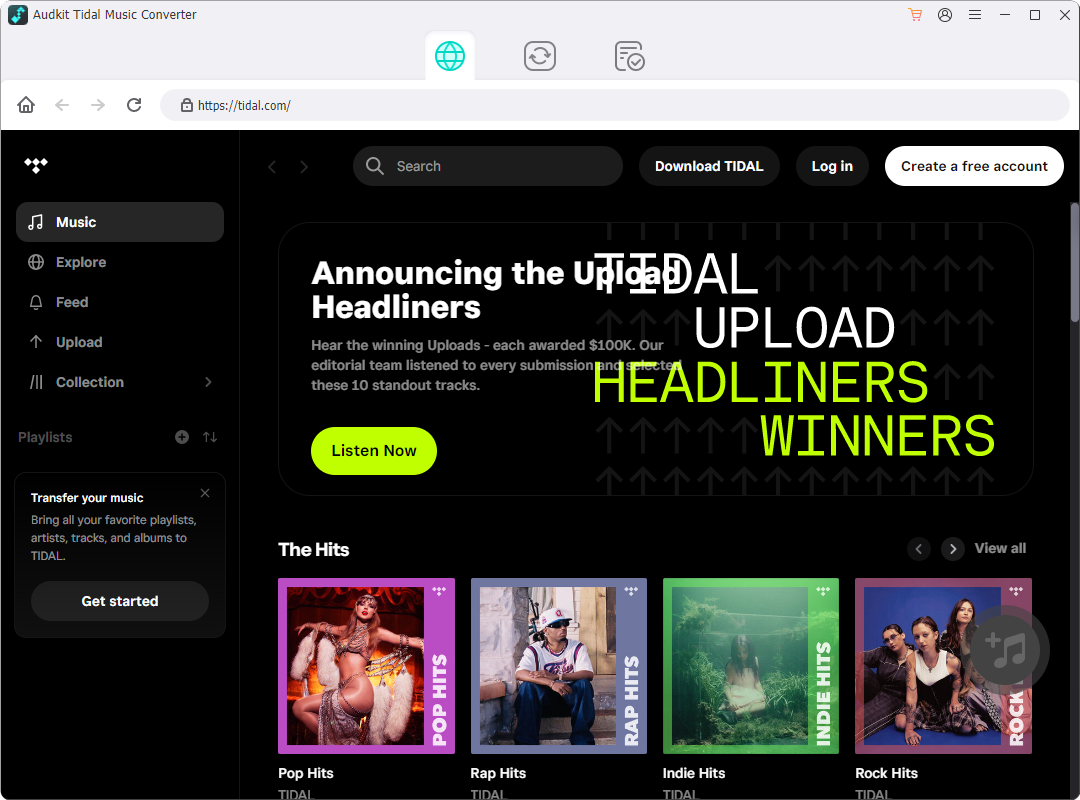
Visit AudKit’s official website to download Tidal Music Converter for PC or Mac according to your computer system version. Next, log in to your Tidal account so that you can find all the music. Don’t forget to register your copy of AudKit Tidal Music Converter.
Step 2 Set Tidal output formats for UAPP
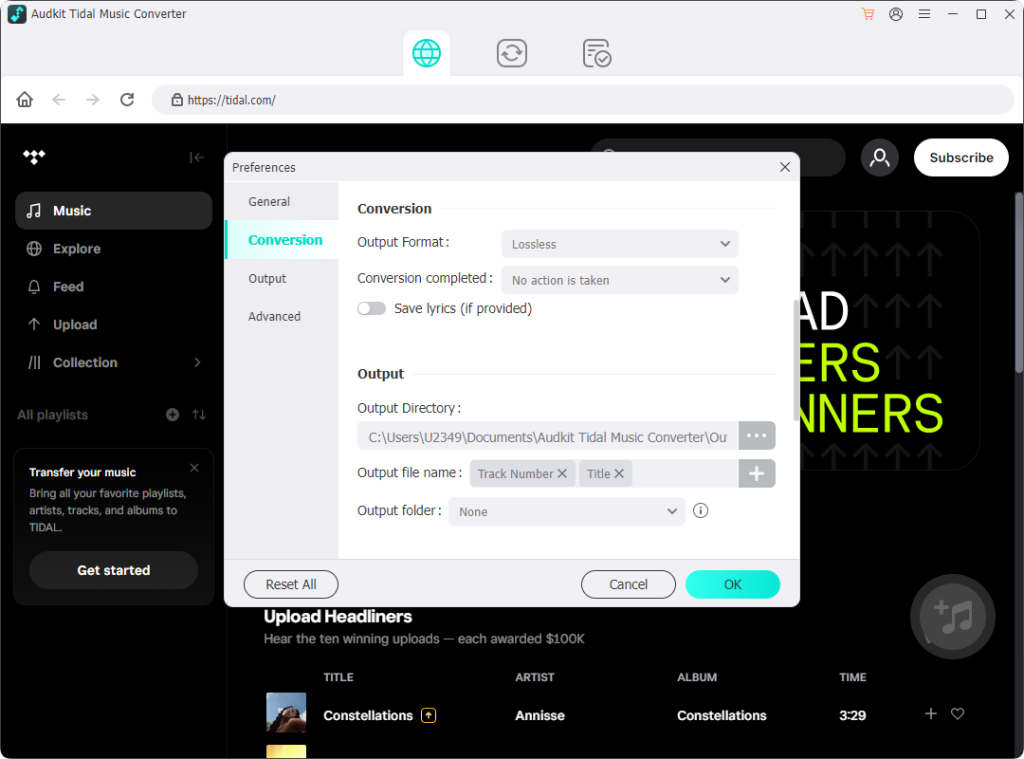
Click the menu icon available on the top right to select Preferences > Convert. Over here, you can customize the Tidal output format for USB Audio Player Pro, channels, sample rate, bit rate, and the archive way as needed. Now that you are able to use the built-in Tidal app search for your favorite playlists. Next, select the shiny blue icon so that you can add the entire playlist or just a few of the selected tracks.
Step 3 Import songs to AudKit and download them for UAPP
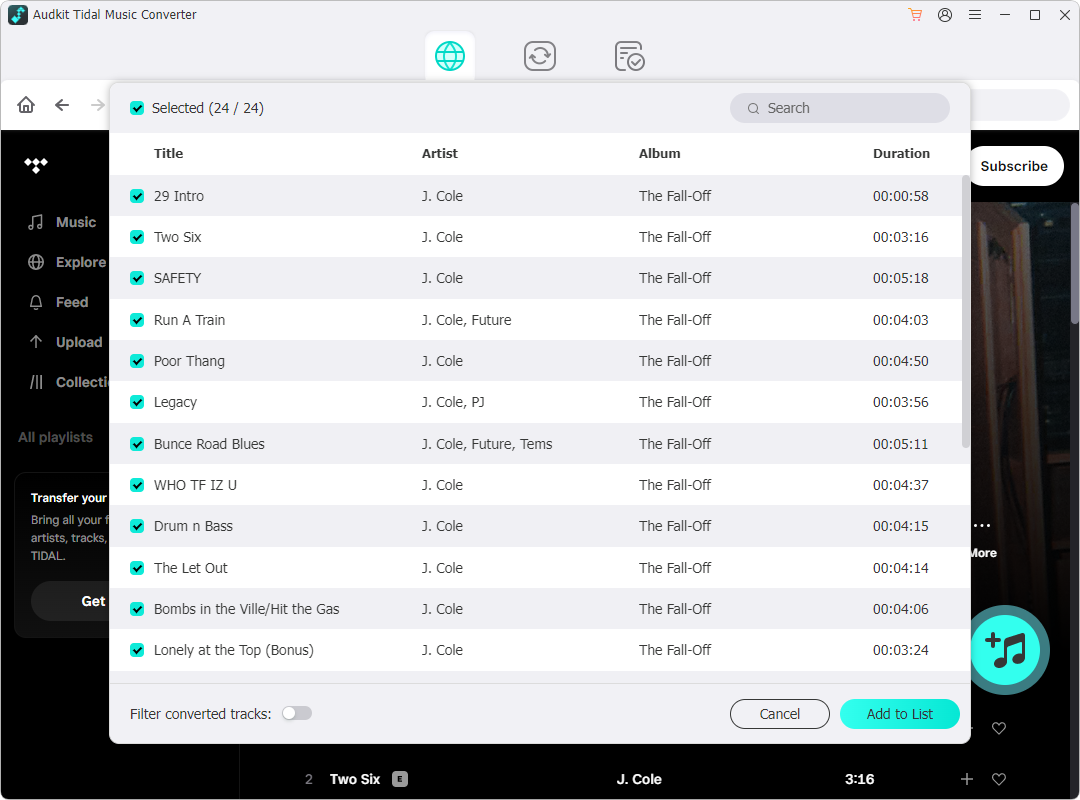
After forming a list of all Tidal songs that you want to download to your PC/Mac, select the convert tab so that you can begin the conversion process. As soon as it’s done, you can click the ‘Converted’ > ‘Search’ tab to locate all your Tidal music downloads. You will then be redirected to the file’s location on your storage.
Part 3. How to Transfer Tidal Tracks to UAPP
So now that you have all the best Tidal music tracks saved on your storage, the last part is to transfer the files to your device so that you can use USB Audio Player Pro Tidal offline.
Step 1. Open File Explorer to find the files that you want to transfer from your PC/Mac to your device that has Tidal UAPP.
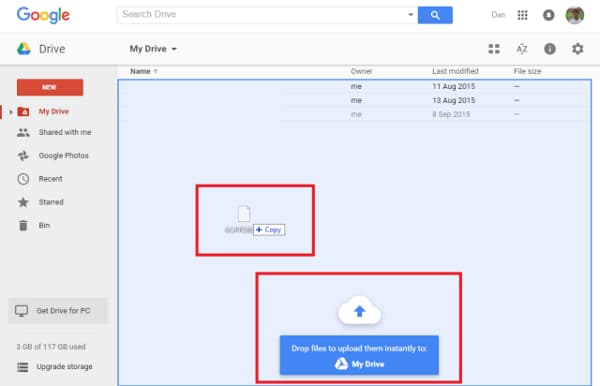
Step 2. The next step is to send over a copy of the files to your device so that you can access the music tracks using Tidal USB Audio Player Pro. And the best way to do that is to use Google Drive because it is fast, secure, and can contain large amounts of data.
Step 3. Drag the files to Google Drive so that you can save them there. Make sure to use the same account used in your UAPP Tidal MQA device.
Step 4. Install the Google Drive app on your Android device if you don’t already have it. To install it go to the Google Play Store and install the app.
Step 5. Open Google Drive on your phone and then locate the exact file you wish to download. And click to download the file.
FAQs About How to Use UAPP Tidal
Why can’t I use Tidal’s official downloads?
Tidal’s offline files are DRM‑locked to its own app. To play them in UAPP, you must first convert them to DRM‑free formats like FLAC or MP3.
Will the conversion preserve lossless quality?
Yes — if you convert to FLAC or WAV at the original sample rate, the audio stays bit‑perfect. Lossy formats (e.g., MP3) will discard detail, so stick with FLAC when quality matters.
Can I stream Tidal on UAPP without a converter?
Absolutely. Log into Tidal inside UAPP, set streaming quality to “Max (Hi‑Res FLAC),” and enable Bit‑Perfect mode — this gives you the same high‑fidelity playback with no file conversion needed.
Conclusion
Hopefully, you now know how to use UAPP to play Tidal music tracks. With the help of AudKit Tidal Music Converter, the process is much more simplified. Now it’s time to give us your thoughts. How was your experience using AudKit? Were you able to successfully download all the music files? Either way, leave a comment down below.

Elle Johnson
 Staff Editor
Elle Johnson has been working in the technology and music software field for over 5 years. She is dedicated to providing easy-to-use guides and effective tips to play music anywhere.