




Quick Answer
- You can’t directly upload personal music files to Tidal — the platform doesn’t support local track uploads and has no built-in “import” feature for MP3s or FLACs from your hard drive.
- The best workaround is to download Tidal songs as local files with a tool like AudKit Tidal Music Converter, then manage them alongside your personal collection in a single music library on your device.
- Playlist transfers from other services are possible via third‑party tools such as TuneMyMusic, but that only moves metadata — you still need a Tidal subscription to stream the tracks.
Tidal gives you high‑fidelity streaming, exclusive content and a vast catalog. It’s a great place to listen, but many users quickly wonder: can I add my own music to Tidal? You might have rare recordings, mixtapes or even files from another service that you want to see inside Tidal’s app. Unfortunately, the platform works differently than an old‑school media player. In this guide we’ll explain why, and show you the most reliable way to bring Tidal music to your local library — so you can build one unified collection.
Part 1. Can I Upload Music to Tidal?
Tidal does not offer a way to upload your own audio files — and that’s by design. The service is built around a licensed catalog, which helps it maintain consistent sound quality and meet agreements with labels. Allowing users to inject unlicensed tracks would undermine those contracts and open the door to unpredictable playback experiences.
You won’t find an “Upload” button in the desktop app, the web player, or the mobile interface. That applies to MP3, FLAC, WAV — any format you have saved locally.
Tip: If you’re moving away from another streaming service, you can transfer playlists and favorites through a third‑party online tool. This won’t upload files; it matches your existing library to Tidal’s catalog.
Part 2. Is There a Way to Download Tidal Music to Local Files?
Yes. While you can’t upload your own music to Tidal, you can do the reverse: download Tidal songs to your computer as unprotected local files. That means you can store them anywhere, play them on any device, and even merge them with your personal collection — without being tied to the Tidal app.
AudKit Tidal Music Converter is built exactly for that job. It takes your Tidal tracks and converts them into high‑quality, DRM‑free audio files (MP3, FLAC, WAV, AAC, M4A, M4B) while keeping all the original ID3 tags and metadata. The process runs at up to 5× speed and doesn’t compromise the HiFi or Master quality you’re paying for.
Main Features of AudKit Tidal Music Converter
- Download music from Tidal on the computer for offline listening
- Convert all Tidal files to Lossless, MP3, FLAC, WAV, and more formats
- Export Tidal music in lossless quality along with all ID3 information
- Let you offline play Tidal music on any device without Premium
How to Get Music on Tidal as Local Files
Here’s the step‑by‑step process using AudKit Tidal Music Converter. You’ll have your Tidal music saved as standard files in minutes.
Step 1. Download and register AudKit Tidizer
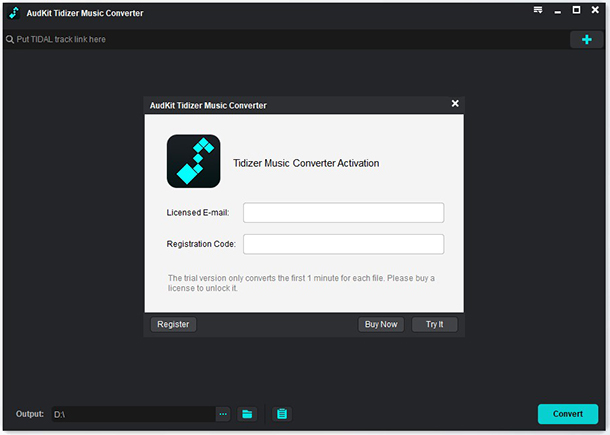
When the download is complete, you need to register an account or you can try the trial version which can convert 1 minute for each file.
Step 2. Add music from Tidal
Once open AudKit Tidizer Music Converter, it will launch Tidal automatically. Copy the Tidal track link and paste it to the search bar or just drag and drop the Tidal track to AudKit Tidizer. Then tap on “+” next to the search bar to check the songs you want to convert.
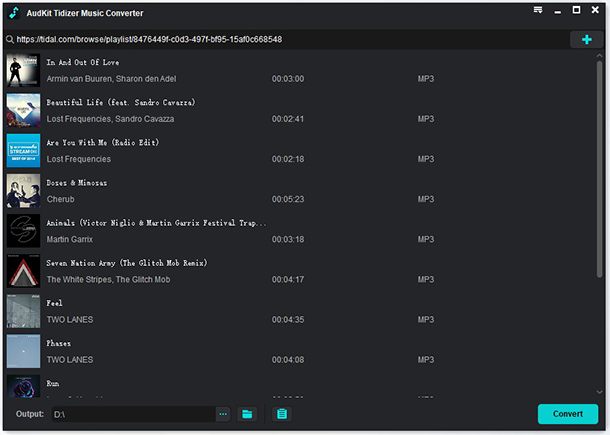
Step 3. Customize Tidal music output format
Find the menu in the top right-hand corner and click “Preference” to customize the format such as MP3, FLAC, WAV, M4A, etc., and sound quality up to 24-bit with FLAC and 32-bit with WAV according to your individual preference.
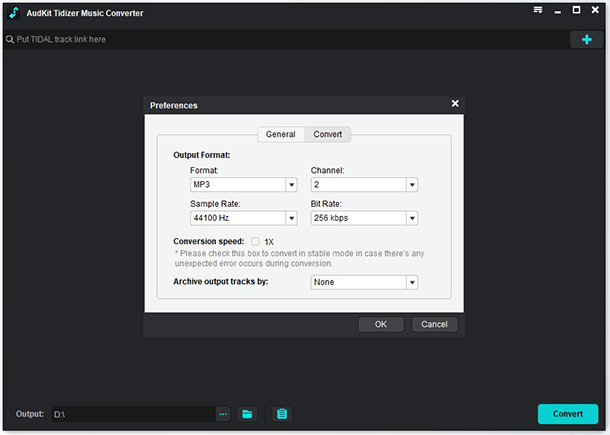
Step 4. Convert and download Tidal music
Click on “Convert” in the bottom right to start the conversion. When it’s done, your Tidal music will be saved as local files on your device. You can click the “File” icon to access your Tidal local files.
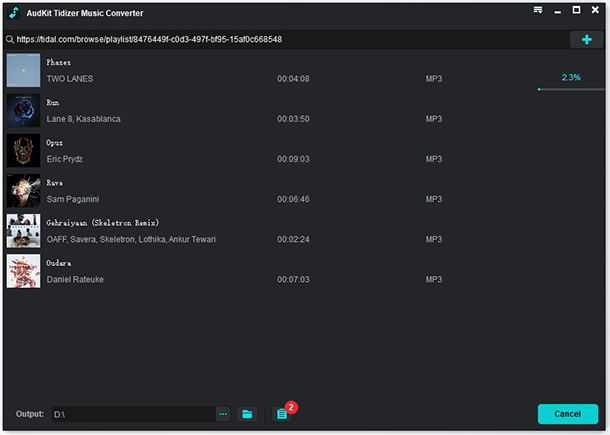
Part 3. FAQs about Adding Music to Tidal
Q1: Can Tidal play local files?
No. Tidal doesn’t include a local file player. If you want to listen to audio files stored on your computer or phone, use a dedicated media player (such as Windows Media Player, Music on macOS, or a third‑party app).
Q2: Does Tidal allow local MP3 downloads?
Tidal itself doesn’t offer a “download as MP3” feature. The offline downloads inside the official app are encrypted and tied to your subscription. To get real, standalone MP3 copies you can keep forever, you need a converter like AudKit Tidal Music Converter.
Q3: How do I move a playlist from another streaming service to Tidal?
Use a third‑party transfer service such as TuneMyMusic. These tools read your playlist metadata from Spotify, Apple Music, Amazon Music, etc., and match the songs to Tidal’s catalog — no file upload involved. It’s the fastest way to settle into Tidal without rebuilding your library from scratch.
Part 4. Conclusion
Tidal won’t let you upload personal music files, and that limitation isn’t going away anytime soon. But that doesn’t mean you have to keep your collections split. By using AudKit Tidal Music Converter, you can pull Tidal tracks out as high‑quality, DRM‑free local files and mix them with your own music on any device. It’s a clean, lossless solution that respects both your existing library and Tidal’s HiFi quality. Give it a try — and finally bring all your music together.

Andrew Rowley
 Staff Editor
Andrew Rowley has over 10 years of writing experience and is good at writing in audio technology and audio converter software. He can provide high-quality articles to help streaming music lovers explore music better.