




Tidal has earned a solid reputation among music lovers and audiophiles for its high-fidelity streaming catalog, featuring over 100 million tracks in CD-quality HiFi, high-resolution master formats, Dolby Atmos, and 360 Reality Audio. Subscribers can easily download music for offline listening on mobile devices. However, these downloaded files are stored as encrypted cache rather than standard audio files, meaning you cannot play them outside the official desktop or mobile app.
If you want to move your favorite playlists to an MP3 player, transfer them to a USB drive for your car, or enjoy them across other media players without restrictions, converting these protected streams into universal audio files is the ideal solution. Below, we break down why Tidal protects its catalog and how you can export your music into open, playable formats.
Quick Answer
Converting your playlists gives you permanent local audio files that maintain original metadata, cover art, and lossless audio fidelity on any device.
Tidal secures its streaming catalog with proprietary encryption, preventing users from transferring downloaded tracks to unauthorized media players or external storage.
A dedicated desktop music converter can re-encode these protected streams into open formats such as MP3, FLAC, AAC, or WAV without quality loss.

Part 1. Why Is Tidal Music Protected by DRM?
DRM, Digital Rights Management, is a set of techniques and standards by which digital content rights are protected and preserved. The goal is to prevent piracy or other illegal uses without permission. Many companies use DRM to prevent unauthorized use that is restricted. Similarly, Tidal is also using the DRM mechanism. Let’s find what made Tidal use DRM protection:
1. Preventing Copyrights
With DRM, the issue of copyright could be minimized while safeguarding the rights of various content creators. In a similar scenario, Tidal has licensed music available from popular artists, musicians, and other recorded labels. Thus, DRM will help prevent the unauthorized distribution of these digital media items. Consequently, only those who have subscribed can listen to and download music.
2. Revenue Protection
Tidal is a subscription-based platform that earns revenue based on purchased subscriptions. DRM will eventually help protect the revenue stream for Tidal. This is because Tidal makes it difficult for users to redistribute or share music content. In this way, users will have to purchase Tidal HiFi or Tidal HiFi Plus as they don’t have other options and cannot listen to music in a free scenario.
3. Maintaining Industrial Standards
Tidal is a well-known name in the market when it comes to music streaming. So it doesn’t compromise the quality and consistency of their work. That’s why using DRM is important for Tidal to meet the expectations of the copyright holders. In general, all major streaming platforms use the DRM mechanism, so DRM becomes a necessity for Tidal as well. Eventually, they will remain an established name in the market.
4. Anti-Piracy Measures
By employing DRM technology, Tidal can use anti-piracy measures to overcome all sorts of illegal access. These measures particularly include authentication and encryption of digital content. So, it will become difficult for everyone who is looking to create a pirated copy of the music. DRM will make sure such a thing doesn’t happen, and this protects the collective interests of Tidal and artists.
Part 2. Best Tidal DRM Removal to Get Rid of DRM from Tidal
If you want to continue using Tidal music on your device without interruptions, AudKit Tidal Music Converter is the best solution. This way, you’ll be able to copy the music on your device or play it on other music players without problems. Meanwhile, the Tidal DRM converter is supported on both Mac and Windows platforms.
The platform allows you to download music, playlists, and even albums. Meanwhile, advanced conversion technology maintains HiFi and MQA lossless quality. The supported music file formats include AAC, FLAC, M4B, MP3, and more. The conversion speed stands at 5X because of the high processing power.
Generally, you can also enjoy music playback on Apple Watch, PS5, Google Home, and others. This is possible by using AudKit Tidal Music Converter. Interestingly, you can listen to songs offline without requiring a Tidal app or subscription. The software is updated on a regular basis and eliminates all sorts of underlying bugs and issues.
Main Features of AudKit Tidizer Music Converter
- Come with a user-friendly interface for easy and convenient use
- Adjust audio settings with the format, bitrate, sample rate, and more
- Experience facility of batch Tidal to MP3 downloads
- Capture and keep ID3 tags from the original content
Step-by-Step Instructions to Use AudKit Tidal Music Converter
Do you also want an answer to the question, how can I download DRM-free from Tidal? Here you’ll find easy steps with detailed instructions on using the AudKit Tidal Music Converter.
Step 1 Edit Tidal audio output preferences
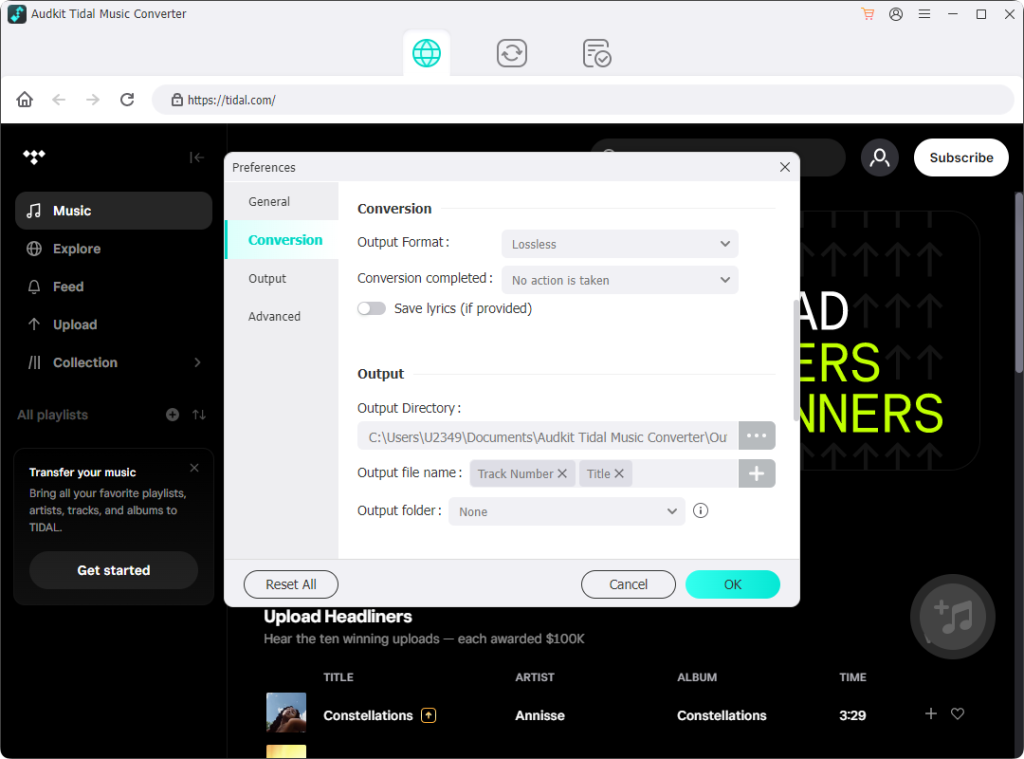
After downloading AudKit Tidal Music Converter on your computer, unlock its features from the “Menu” after registering. Continue to select “Preferences” from “Menu” and access the “Convert” tab. Make sure to customize the output format, sample rate, channels, bitrate, and more. You are able to convert the output format of Tidal to MP3, WAV, FLAC, AAC, M4A, and M4B.
Step 2 Copy Tidal URLs to AudKit Tidal Music Converter
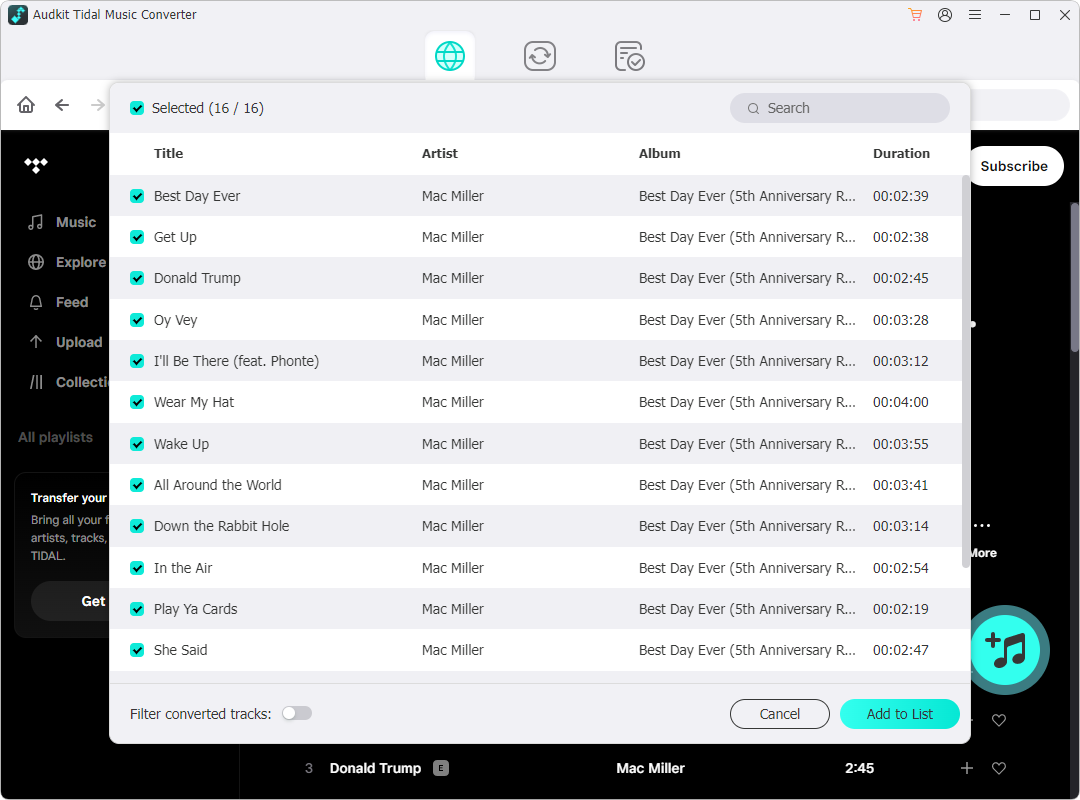
Proceed further to drag and drop the music from Tidal to AudKit Tidizer Music Converter. In another scenario, you can right-click on the Tidal track, select “Share” and choose the “Copy Track Link” option. Paste this link on the AudKit Tidizer search bar and press the “+” icon for a successful import.
Step 3 Download music to remove Tidal DRM
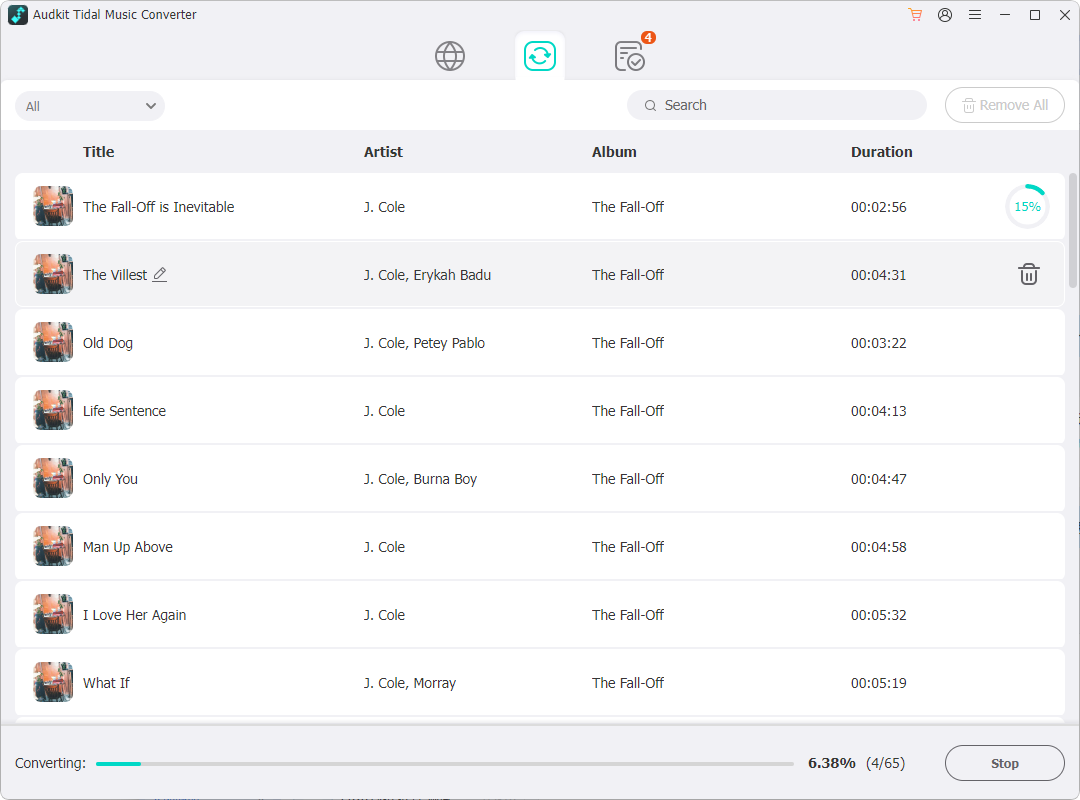
After your music is imported, press the “Convert” button, and the conversion process begins. You have the option to add further songs during the conversion process. A red tip appears on the “Converted” icon when the conversion is completed. You can also press the icon to preview the downloaded music.
Frequently Asked Questions
Can I listen to Tidal songs on an MP3 player without the official app?
Standard Tidal downloads can only be played inside the official Tidal mobile or desktop software due to encrypted cache restrictions. To listen on an MP3 player, smart speaker, or car stereo, you must first convert your tracks into an open format like MP3 or FLAC using an audio converter.
Does converting protected Tidal songs reduce audio fidelity?
Audio fidelity depends on the output format you choose. If you choose FLAC or WAV as the target format, the conversion retains lossless bit-depth and sample rates identical to the original stream. If you select MP3 at 320 kbps, the compression is virtually indistinguishable to most listeners while significantly reducing file sizes.
Can AudKit Tidal Music Converter preserve ID3 tags and album art?
Yes. The software automatically extracts and embeds complete ID3 metadata into the downloaded files. This includes track titles, contributing artists, album names, release years, track numbers, and high-resolution cover artwork, keeping your local music library neatly organized.
Part 3. In Conclusion
Like other music streaming platforms, Tidal is among the popular utilities. Meanwhile, using Tidal can restrict you from listening to songs in offline mode on your device. This is because of the DRM technology embedded in the Tidal. If you want to remove Tidal DRM, this article provides the best way to start. A reliable and trusted solution is AudKit Tidal Music Converter which can download Tidal HiFi and Tidal MQA music offline.

Andrew Rowley
 Staff Editor
Andrew Rowley has over 10 years of writing experience and is good at writing in audio technology and audio converter software. He can provide high-quality articles to help streaming music lovers explore music better.
2 replies on “How to Remove DRM from Tidal [Tips]”
Purchased lifetime Tidizer, used it for a while on my laptop because my desktop wouldn’t load Tidal due to a problem with Windows 11 installation. Months later, when I had the time for a complete (destructive) re-install of Windows 11, I installed the current version of Tidal and Tidizer (entering my registration #): Tidizer now will not copy tracks. I have tried both drag-n-drop and cutting and pasting to the Tidizer URL bar, click “convert”, the clock starts to the right of the first song of an album, but never progresses. It saves a 0’0″ (empty) copy of the track to the target folder and stops.
Please update our Tidizer to the latest version also to see whether it works well. If not, please contact our Support Team to fix your issue well ASAP.